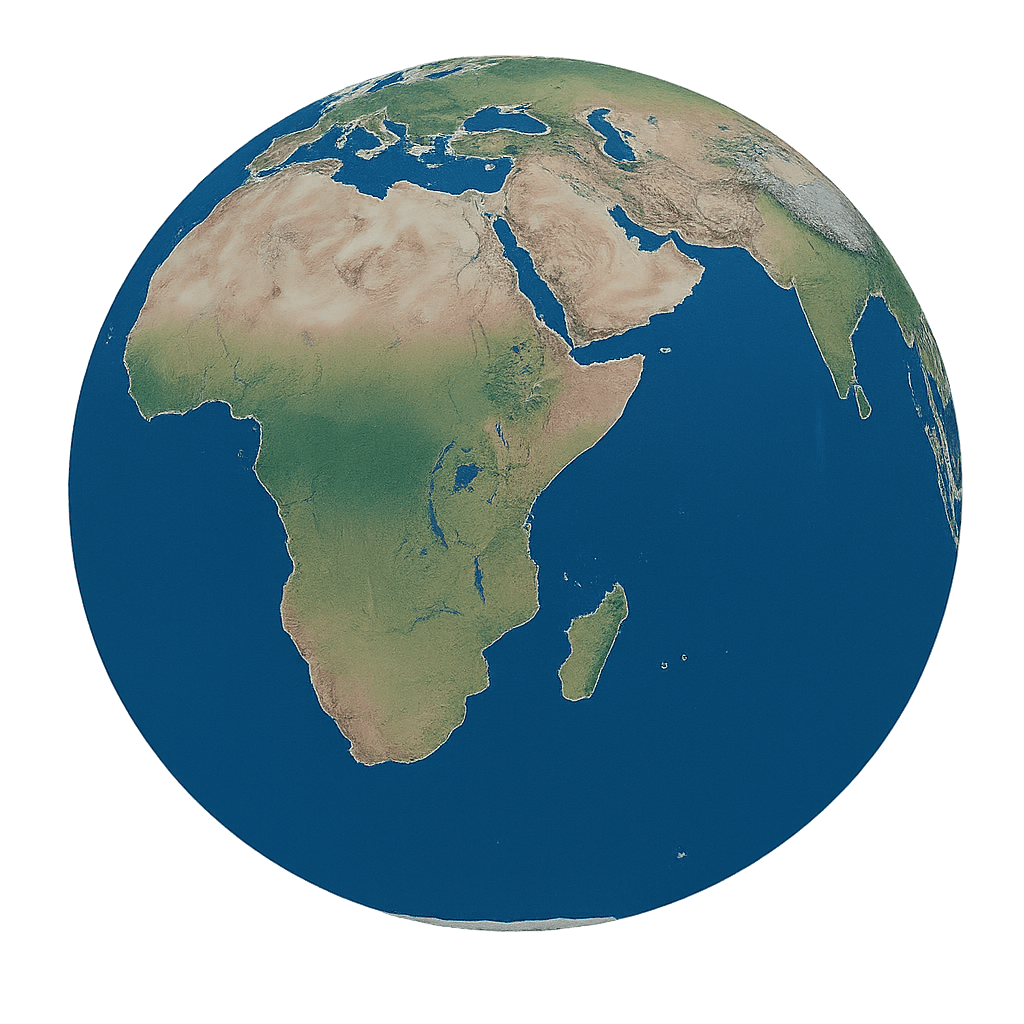

India Urged to Ensure Sri Lanka Aid Is Not Used to Impose Cultural Symbols or Rewrite Tamil History
US Tamil Diaspora urges India to ensure its $450M aid to Sri Lanka is used for humanitarian relief, not contested religious symbols.
India’s aid must heal communities, not rewrite history. We urge India to ensure its support to Sri Lanka is used only for civilian relief, not imposed religious symbols in Tamil regions.”
NEW YORK, NY, UNITED STATES, December 23, 2025 /EINPresswire.com/ -- The US Tamil Diaspora respectfully urges the Government of India to ensure that its recently announced USD 450 million assistance package to Sri Lanka, intended for post–Cyclone Ditwah recovery, is not used—directly or indirectly—to fund religious or cultural projects that impose contested historical narratives or marginalize Tamils.— Tamil Diaspora News Editorial Board
The US Tamil Diaspora welcomes India’s humanitarian support aimed at rebuilding homes, livelihoods, healthcare, and essential infrastructure affected by the cyclone. However, international law requires that humanitarian assistance not be used to advance cultural domination, demographic transformation, or historical erasure.
Under Article 1(2) of the United Nations Charter, all peoples have the right to self-determination, including the freedom to pursue their cultural development without external imposition. The International Covenant on Civil and Political Rights guarantees, under Article 18, freedom of thought, conscience, and religion, and under Article 27, the right of Tamils to enjoy their own culture and practice their religion without interference.
Accordingly, the US Tamil Diaspora calls on India to require explicit assurances that Indian funds will not be allocated to the construction or expansion of Buddhist viharas in Tamil areas where such projects are contested by local Tamil communities; to the promotion of mythical or exclusionary historical narratives derived from the Mahavamsa as state symbolism; or to any activity that alters, erases, or overwrites the living cultural heritage of Tamils under the guise of archaeology, religion, or development.
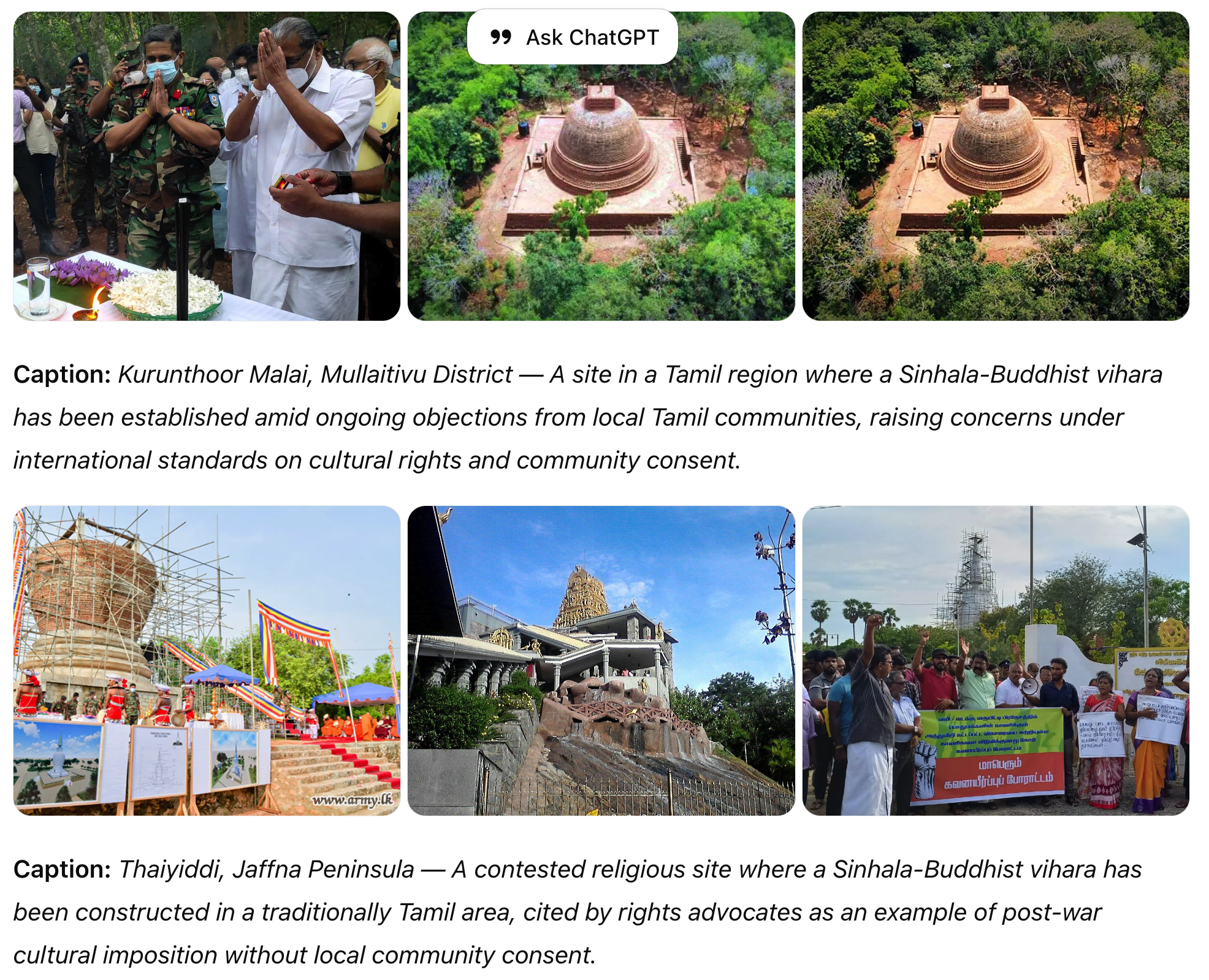
Recent developments at Kurunthoor Malai in Mullaitivu District and at Thaiyiddi in the Jaffna Peninsula illustrate these concerns. In both locations, Sinhala-Buddhist structures have been established or expanded in Tamil regions without the free, prior, and informed consent of local Tamil communities, accompanied by state protection and restrictions on traditional Tamil religious practice. These sites have become symbols of cultural imposition rather than reconciliation, deepening fear and mistrust among Tamils in the post-war environment.
When reference is made to “other communities” in early Sri Lankan history, this does not refer to a Sinhala identity, which did not exist in its present form during the relevant periods. Rather, the Tamil-speaking population historically practiced multiple spiritual traditions, including Saivism, early non-ethnic Buddhism, and indigenous spiritual traditions rooted in the land. Being Tamil-speaking never meant adherence to a single religion. Attempts to retroactively convert this plural past into a singular Sinhala-Buddhist narrative represent historical distortion, not reconciliation.
Sri Lanka’s post-war experience shows that religious symbolism and archaeology have, at times, been used as instruments of state power, resulting in fear, displacement, and the silencing of Tamils. Such practices undermine reconciliation and contradict international standards, including the United Nations Declaration on the Rights of Indigenous Peoples, which prohibits forced assimilation and protects cultural heritage, sacred sites, and the spiritual relationship of peoples with their traditional lands.
The US Tamil Diaspora urges India to ring-fence all funds strictly for humanitarian relief and civilian reconstruction; to exclude religious monuments and symbolic projects from eligible expenditures; to mandate transparency and independent monitoring of all disbursements; to require the free, prior, and informed consent of Tamil communities for any culturally sensitive activity; and to align implementation with international standards protecting the cultural, religious, and land rights of Tamils.
India’s leadership carries moral and regional significance. By conditioning its assistance to uphold neutral humanitarian objectives and respect for Tamil history, land, and cultural continuity, India can ensure that its generosity heals communities rather than deepens divisions.
Humanitarian aid should rebuild lives, not rewrite Tamil history.
Editor
Tamil Diaspor News
+1 516-308-2645
email us here
Legal Disclaimer:
EIN Presswire provides this news content "as is" without warranty of any kind. We do not accept any responsibility or liability for the accuracy, content, images, videos, licenses, completeness, legality, or reliability of the information contained in this article. If you have any complaints or copyright issues related to this article, kindly contact the author above.
